Behind the Build: The Grand Brighton
October 6, 2025
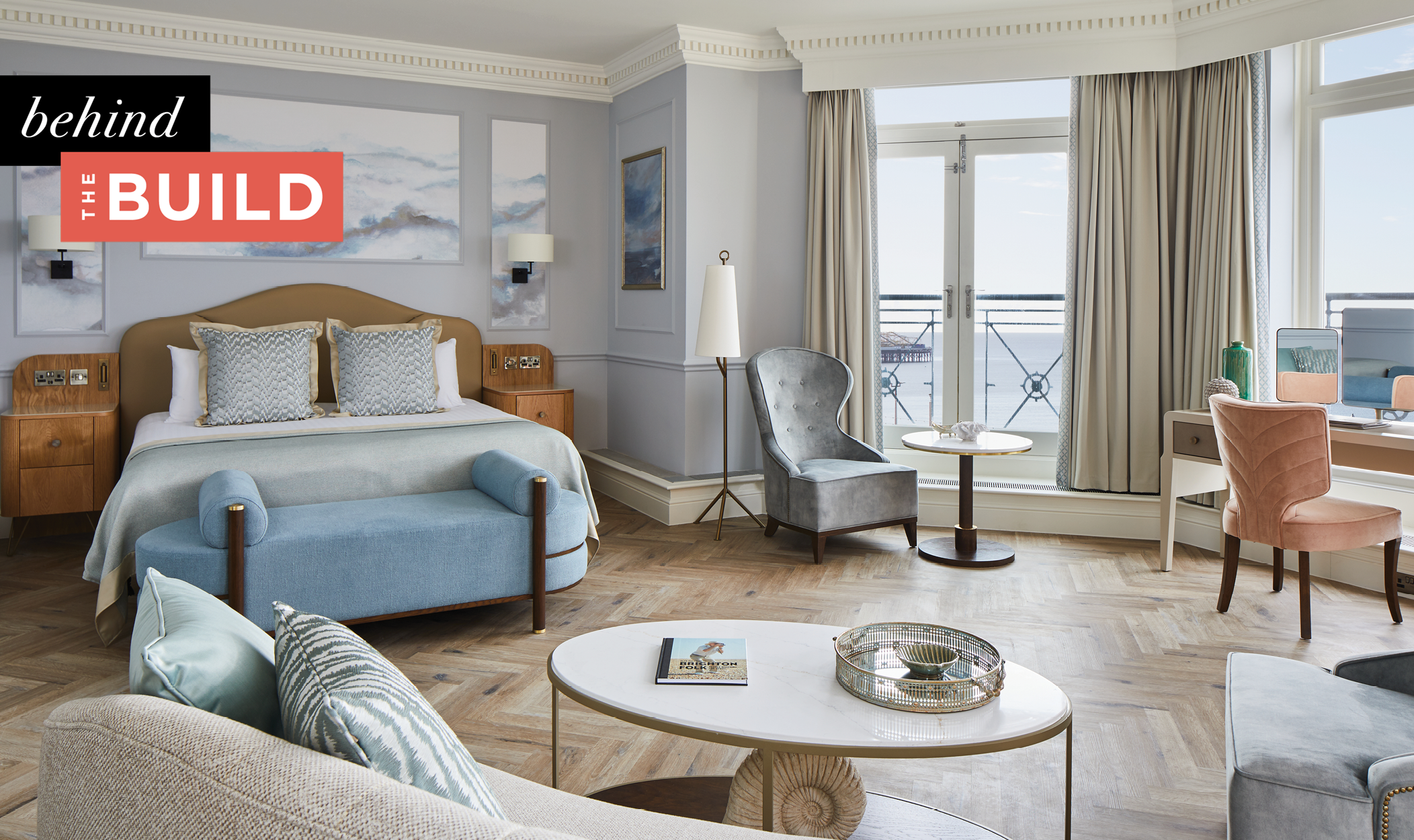
MGAC was founded on a simple promise: to take the most interesting, ambitious project ideas and make them a reality. Getting there is a matter of countless small steps, conversations, and carefully-calibrated decisions, taking place between day one and that long-awaited delivery day. These are the moments that make a project. With our Behind the Build series, we take a closer look at the roads that lead to a final product, delving into the ways our talented, passionate team makes a project possible. Today, we revisit our work on The Grand Brighton.
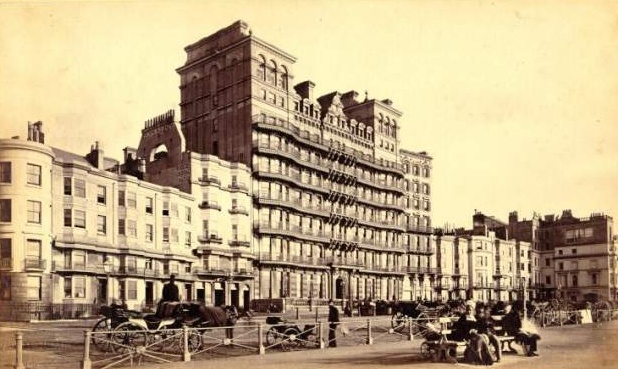
When the stately Grand Brighton first opened its doors in the summer of 1864, the “Palace by the Sea” was met with much fanfare. The luxury accommodation, designed in the Victorian style by celebrated architect John Whichcord Jr., notably featured the very first hotel lift outside of London—in that era referred to as “vertical omnibuses” and powered by massive water tanks on the seventh floor.
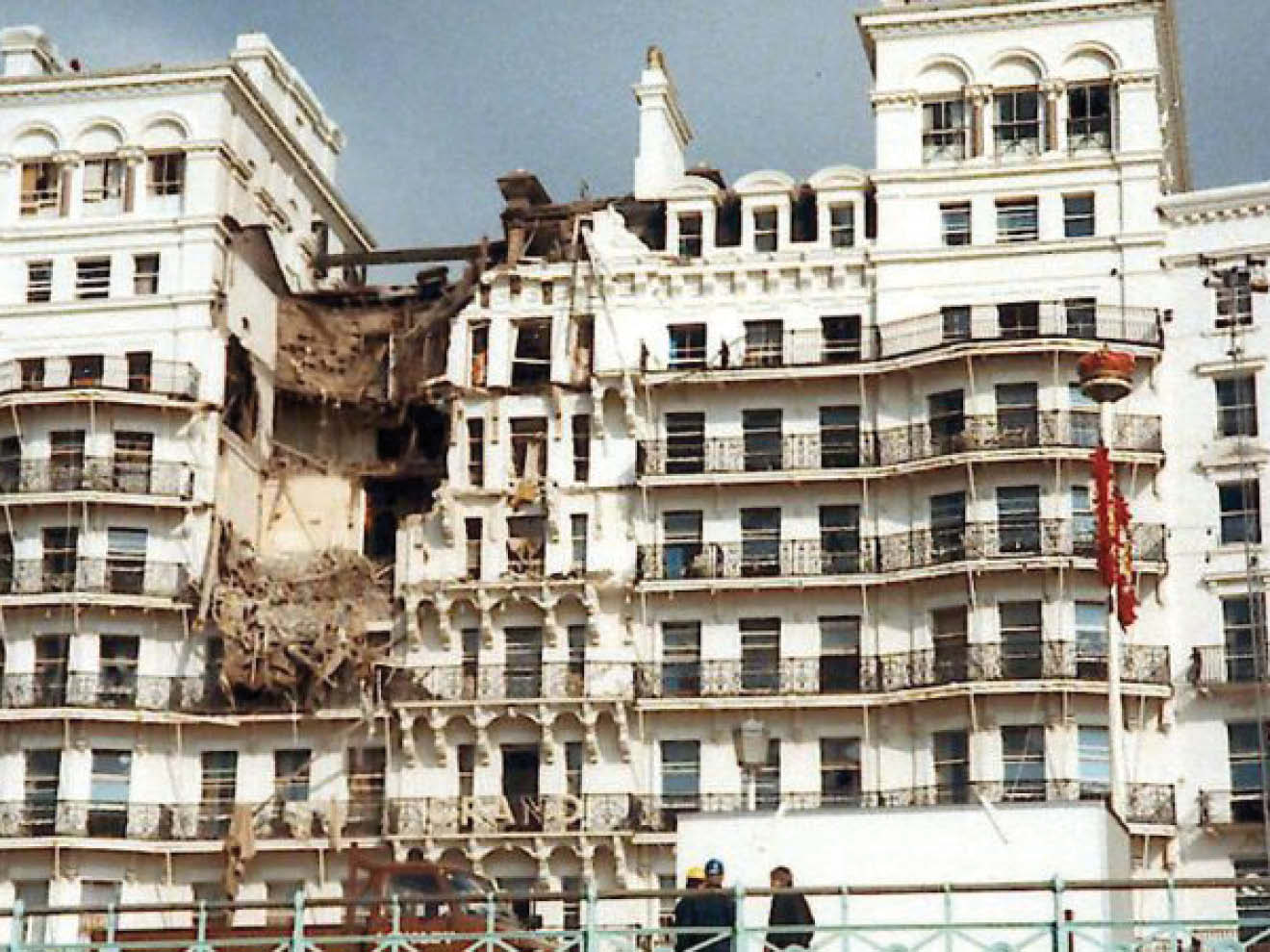
Over the decades, the beloved hotel consistently welcomed guests eager for a seaside escape, save for a few interruptions. First, during WWII, when it was requisitioned by the Ministry of Defence to house Australian airmen for five years—some of whom left graffiti etched into the original marble pillars, still visible today. Nearly 50 years later, in 1984, the property was thrust into the global spotlight when the IRA bombed it during a Conservative Party Conference. While targeting then-Prime Minister Margaret Thatcher, the attack killed five people and injured nearly three dozen, though Thatcher was unharmed. After closing for repair and renovations, the hotel reopened in 1986.
Countless memories were shaped in its storied halls and gathering spaces as the Grand went on to host the likes of Charlie Chaplin, ABBA, Prince Edward, Norman Cook (AKA Fat Boy Slim), and Helen Mirren. Needless to say, if the historic property’s walls could talk, it would have quite a few tales to share. In 2023 another key development occurred, when the 160-year-old building changed hands. While the Grand had long been a beacon of design and legacy on the Brighton seafront, the city had grown up around it, and modern offerings were creating competition. Its new owner saw an opportunity to bring the icon back, and initiated a refurbishment to secure its future as the city’s premier luxury destination.
MGAC’s pairing of deep sector knowledge and local presence—our Brighton office is just minutes from the Grand—made the firm a natural fit to provide cost management services for the legacy project. A visionary restoration followed, led by an outstanding project team including Consarc Design, Garuda Design, BSG UK, MSC Fire, and Edgewater Contracts overseeing the guestrooms, and Konstruct Group overseeing the spa and breakfast rooms.
GRAND PLANS FOR A GRAND HOTEL
As cost managers, much of our most critical work happens on a project’s front end, to pave the way for a smooth path to come. Here, we immediately set about finalising the scope and producing a corresponding detailed CapEx budget. An early cost analysis exercise came in the form of comparing two different room design directions. When we determined both came with similar costs, making it purely an aesthetic choice, our next step was to help facilitate the development of two sample rooms to finalise the decision.
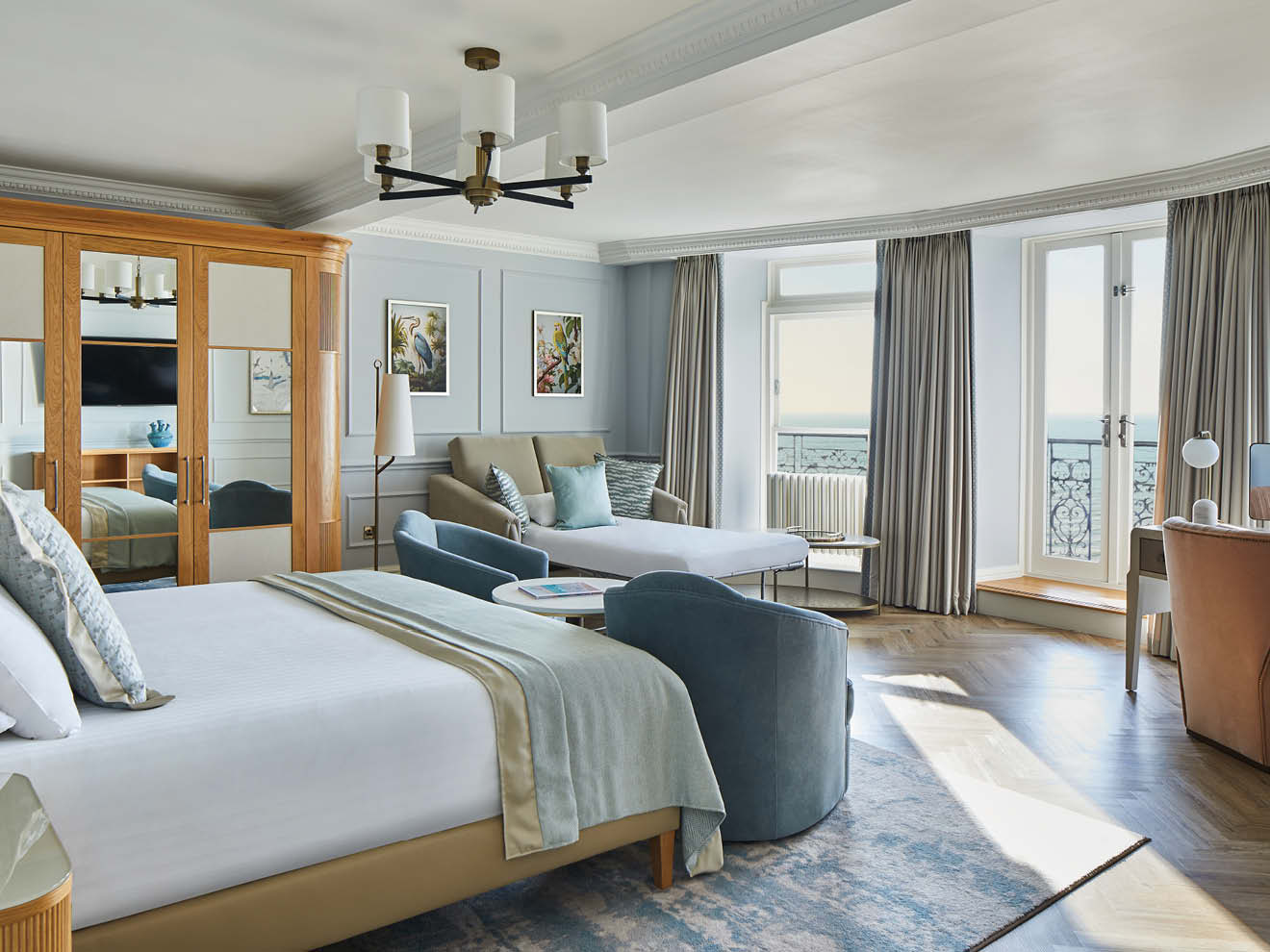
Once a design direction was selected—a decidedly luxurious, five-star feel—it was time for work to fully get underway. To maximise our client’s budget and create efficiencies in workflow, we split the project into multiple work streams: guestroom refurbishment and conversion of meeting space to guest keys, creation of a new spa, and development of breakfast rooms. With contractors best suited for different phases selected to spearhead them, a coordinated plan was conceived, with the largest package first: guestroom refurbishment.
To maintain alignment, bi-weekly partner meetings were held and a standing 30-minute client call—an effective forum for addressing timely issues, sharing sector insights, and co-developing solutions. With institutional funding in play, we also developed clear financial reports to keep funders fully informed.
TRANSFORMATION, THOUGHTFULLY DELIVERED
Projects involving the refurbishment of a historic structure are often not defined by what you see—but what you don’t. A Grade II listed building, the Grand features an ornate façade and intricate interior details.
Our project management background and experience overcoming many challenges around historic refurbishment allowed us to proactively offer advice and best practices as we assisted the client in the engagement of local authorities to review the planned design and moved through the process for building consent.
But significantly, the Grand’s historic fabric was permanently altered when the 1984 bomb ripped out the centre of the hotel. During reconstruction, the affected rooms were rebuilt using a different structural approach. As such, much of our work revolved around identifying and analysing that area to understand the construction typology that had been used to bring them back online some 40 years ago through historical reports and archival resources.
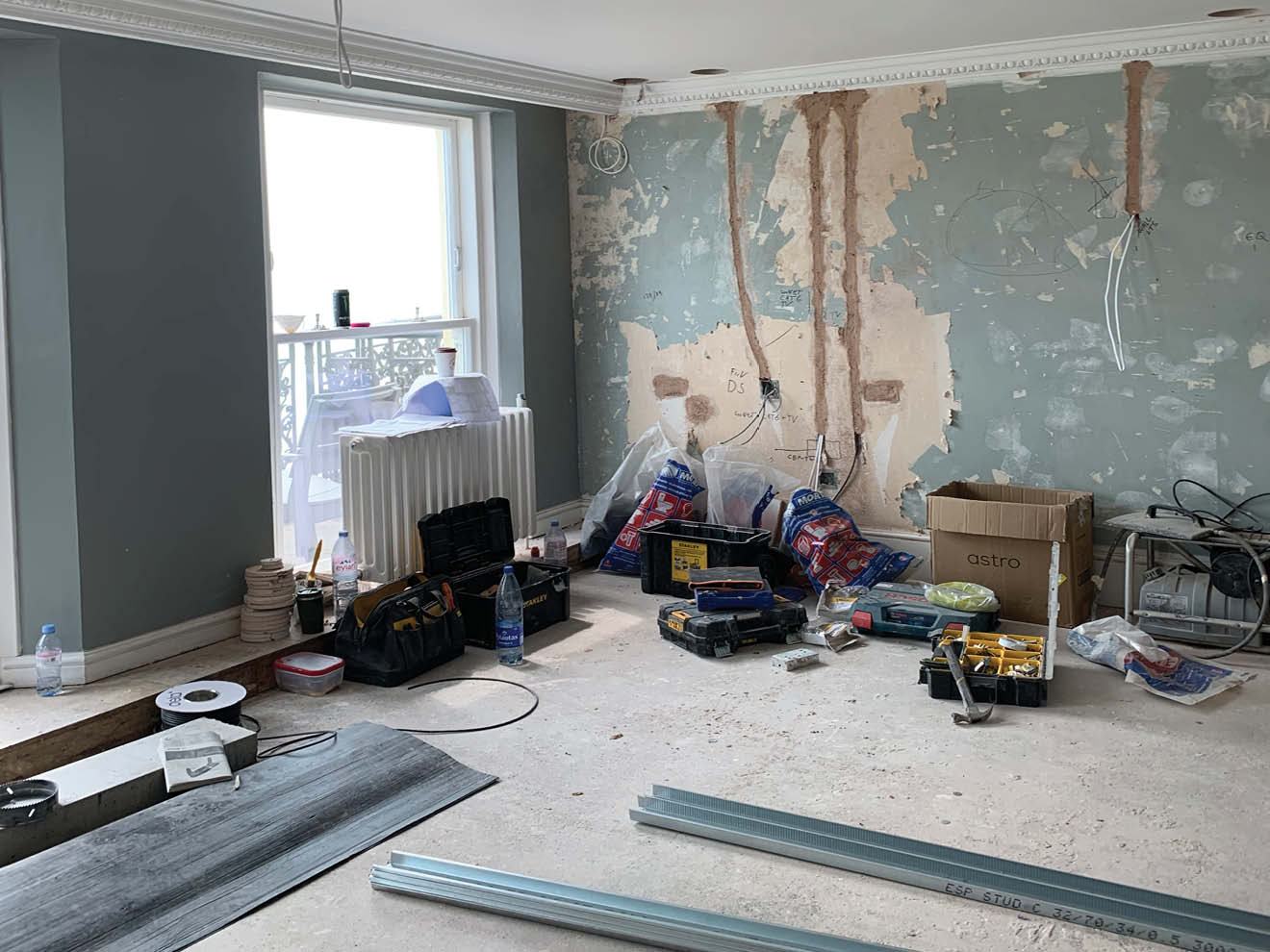
One of the two sample rooms the team used for the exploratory design exercise had actually been among those impacted by the bomb. Stripped back to its shell and core, it served as a window into the past, allowing us to directly gauge the nature of the reconstruction. Throughout this period, we were closely involved to continue de-risking the project from a budget standpoint.
MINIMAL IMPACT. MAXIMUM CONSIDERATION.
Hospitality renovations come with the unique and formidable challenge of executing work without disrupting routine operations. Such was the case here, which necessitated our efforts to play out on a floor-by-floor basis, allowing hotel guests to occupy the others undisturbed. We aligned the contractor’s sequencing with the hotel’s operational priorities, optimising the displacement schedule through programme analysis and open communication with all involved parties.
Still, there came a two-month period during the peak summer season in which work needed to cease entirely, and again in autumn when many political parties hold annual conferences in Brighton and the hotel was fully booked. With those key dates in mind, we worked closely with the client / professional team and the guestroom contractor to accelerate projects ahead of time and ensure we remained on schedule.
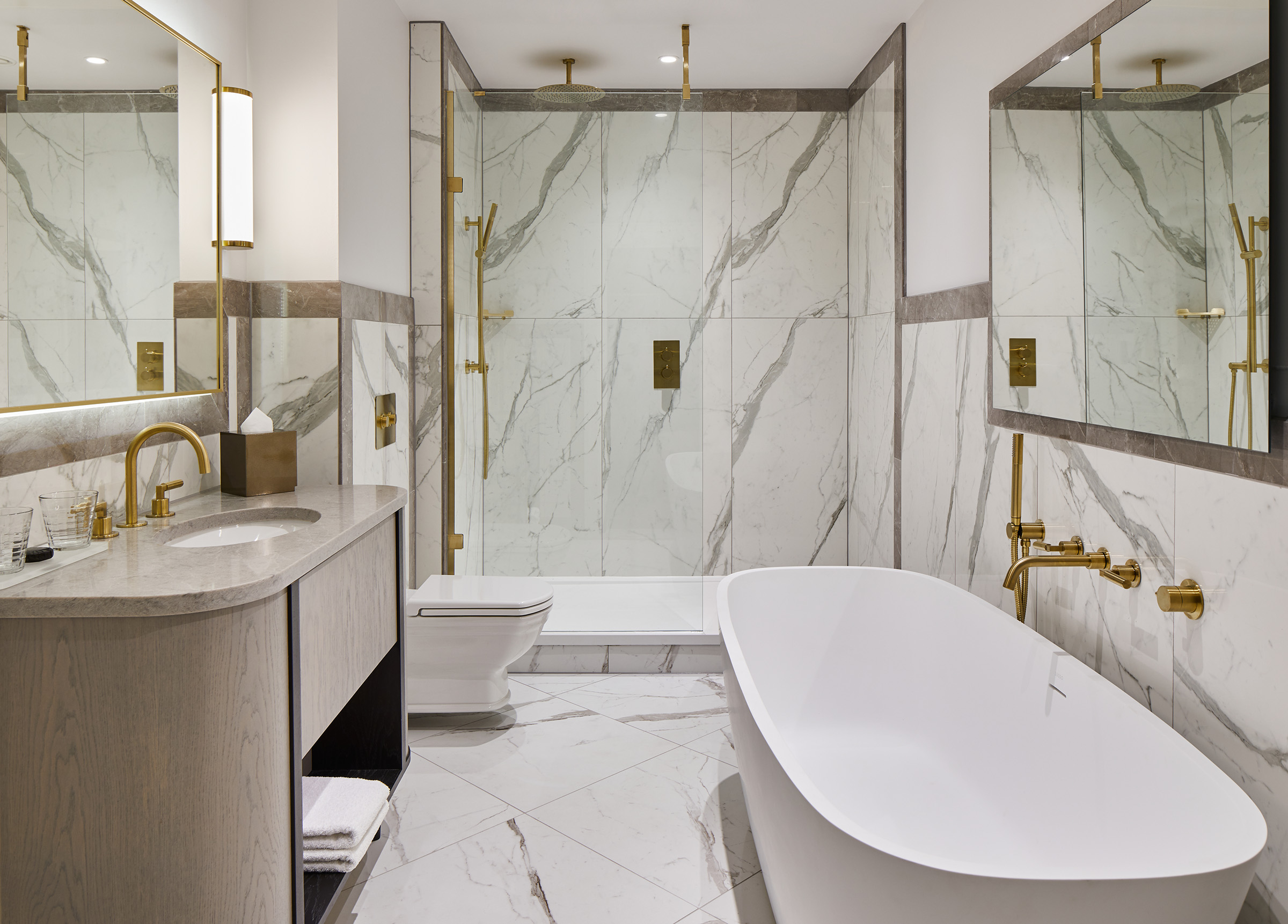
As work on the guest keys came to a close, we turned our eyes to the spa buildout, which would convert an unused basement filled with steel support columns and breezeblock into a serene sanctuary worth travelling to. Today, historic vaults house treatment rooms and guests have access to facilities including a hydrotherapy pool, jacuzzi, sauna and steam room, experience showers, and relaxation areas.
REFINED SERVICE. RENEWED SPACES.
Behind every luxury property is a dedicated staff whose daily operations and exceptional service uphold the hotel’s legacy of five-star hospitality. While the majority of this refurbishment focused on guest-facing areas, our client also sought to transform underutilized space to provide better welfare facilities for staff.
The renovation created a new canteen and relaxation area with a contemporary street art aesthetic to provide a welcoming environment for the full team. In reference to Brighton’s reputation as a hub for arts and culture, hotel staff volunteers were engaged to produce bespoke murals and artwork with designs celebrating the diversity of the area. The collaboration not only supported in-house talent, but introduced a distinct urban vibrancy to the historic space—a striking fusion of old and new.
CHECKING INTO A NEW ERA
Today, the Grand Brighton once again takes centre stage on the buzzing Brighton seafront. The hotel’s history is in full view, from the dramatic splendour of its original sweeping staircase to stunning sea vistas from its 205 guestrooms. The lovingly executed restoration has elevated the experience for discerning guests and dedicated hotel staff alike, and we’re proud to have played a key role in priming this storied landmark for its grandest chapter yet.